— why clay

The quiet gifts of an earthen pot.

For two thousand summers, Indian kitchens have kept their water and cooked their meals in unglazed clay. Modern labs are only now catching up with what our grandmothers already knew — that the pot itself is part of the recipe.

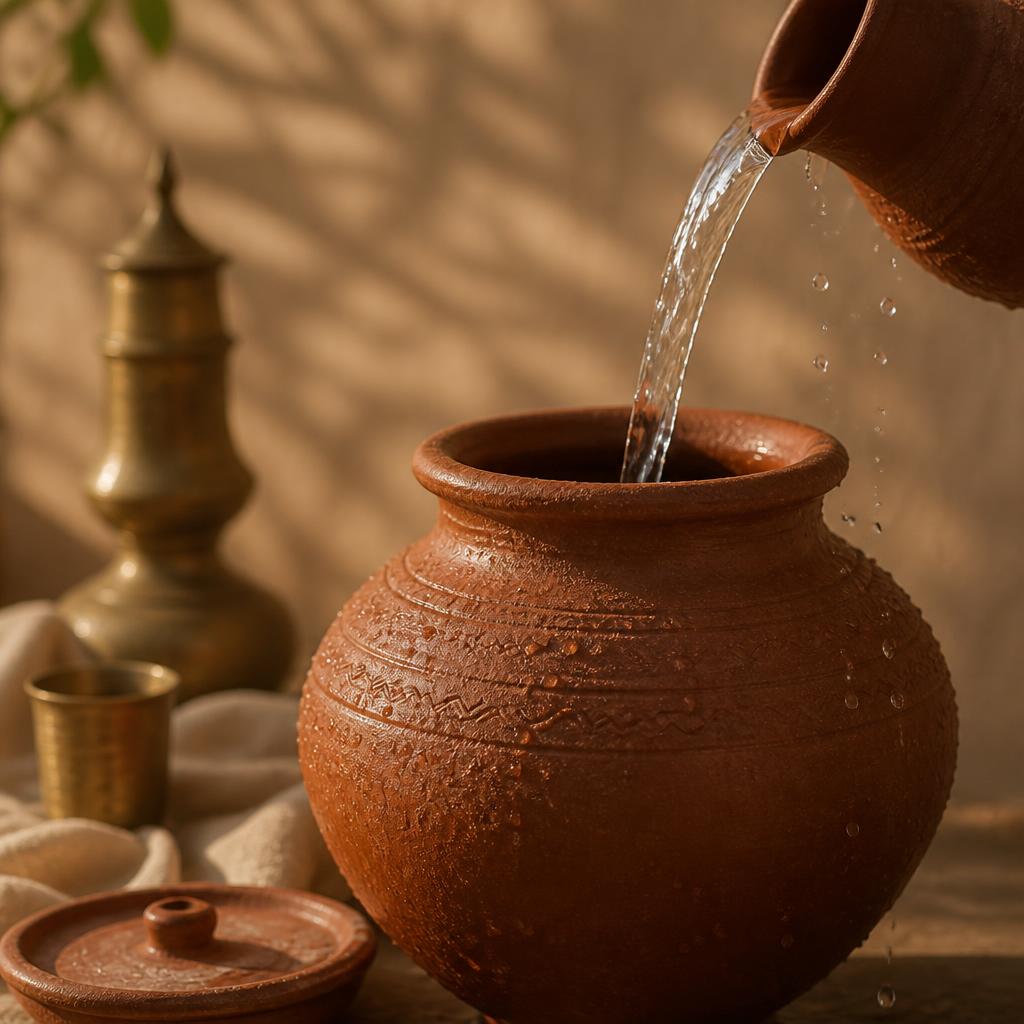
Overhead view of clear water resting inside a terracotta matka in warm morning light

01 — Water

Naturally alkaline water

Clay is faintly alkaline. As water rests inside an unglazed matka, its pH lifts gently — softening the sharp acidity of tap water and calming the gut. What you sip in the morning is water the way rivers meant it to be.

  • Balances the body's pH after sleep and meals
  • Eases acidity, heartburn and bloating
  • Tastes rounder, sweeter — never metallic
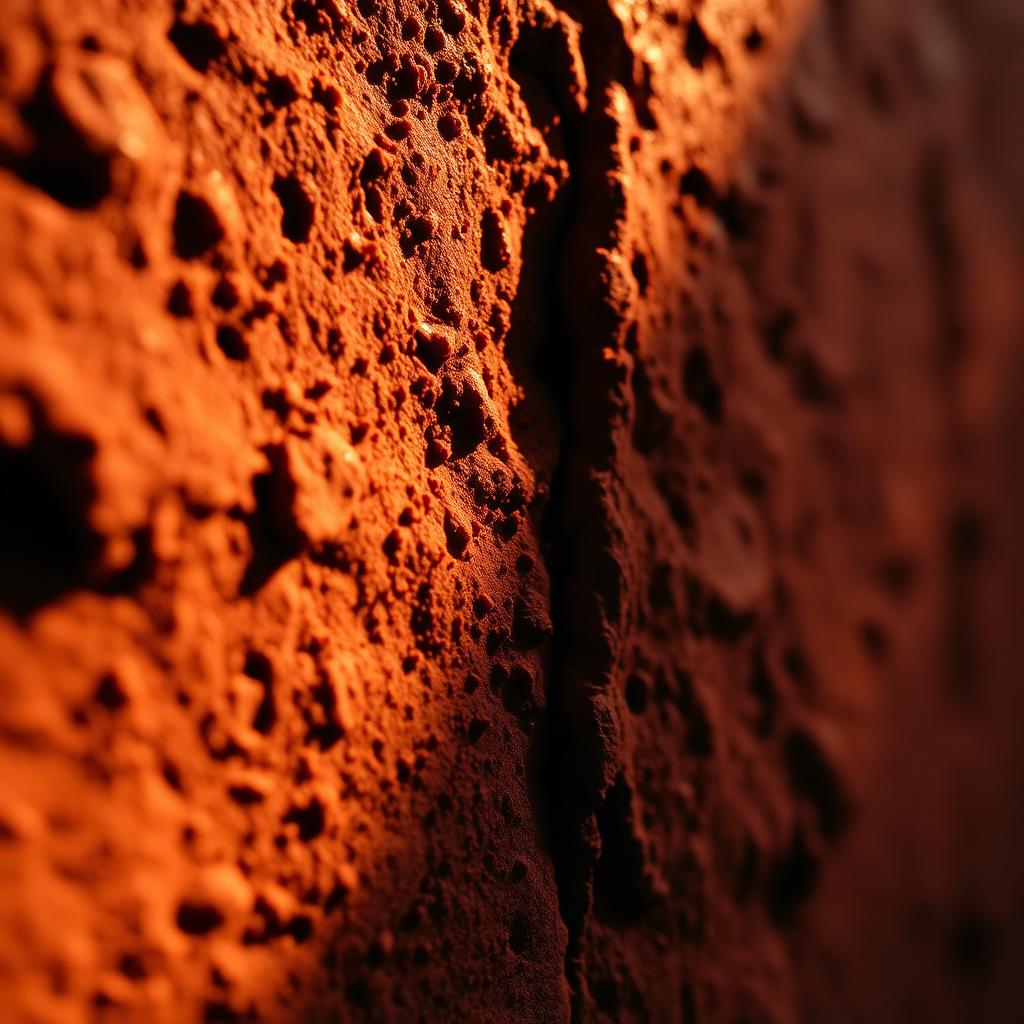
Macro close-up of porous terracotta wall showing tiny channels in warm red-brown clay

02 — Minerals

Trace minerals from the earth

As water seeps slowly through the pot's micro-porous walls, it picks up small, natural amounts of iron, magnesium and calcium from the river clay. A soft mineralisation — nothing added, nothing stripped.

  • Iron & magnesium from Ganges-plain silt
  • No chlorine aftertaste, no plastic leaching
  • The pot literally gives back to the water
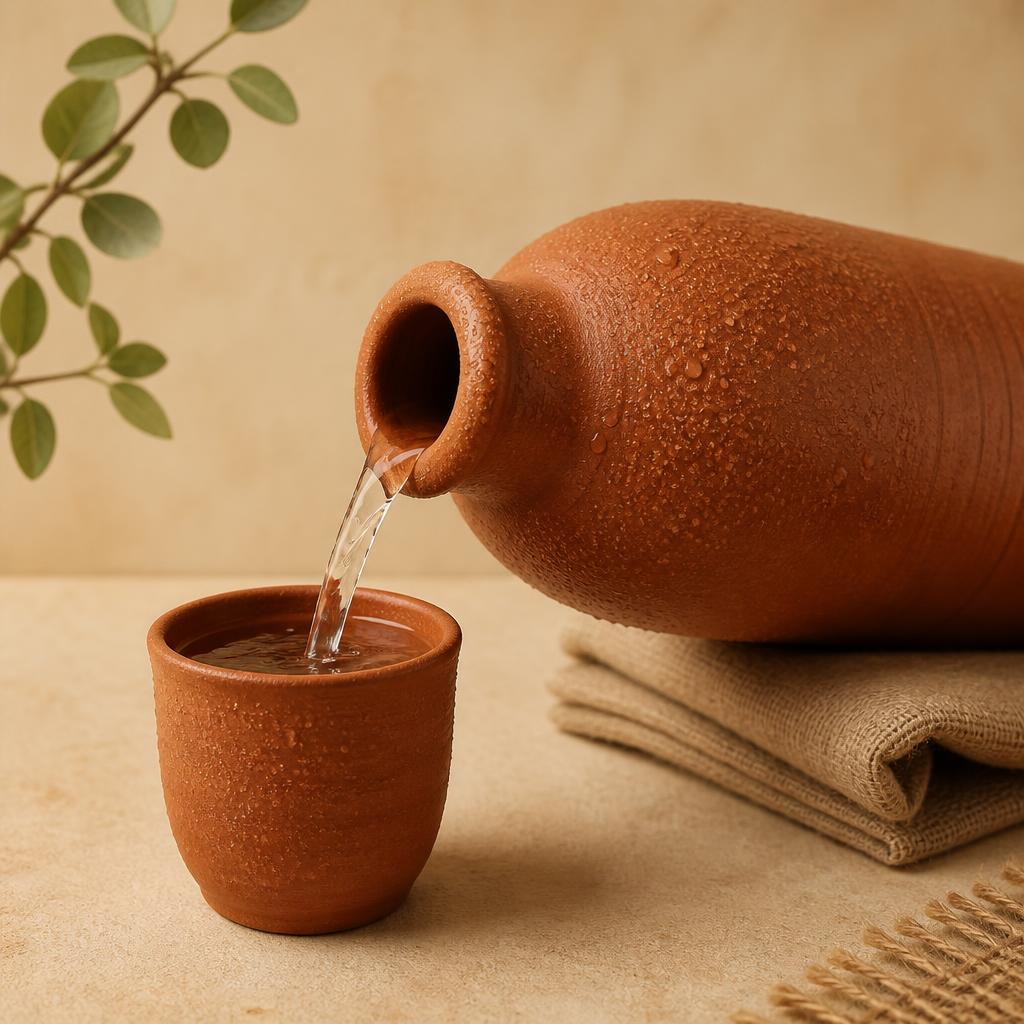
Hands pouring cool water from a clay bottle into a small clay cup in a warm Indian kitchen

03 — Cooling

Cool water without electricity

Thousands of tiny pores let a whisper of water evaporate through the pot's skin. That evaporation cools the vessel from within — 8 to 12 °C below room temperature, without the harsh chill of a fridge that shocks the throat.

  • Ayurveda-friendly — kind to throat, lungs, teeth
  • No refrigerator, no power, no plastic bottle
  • Perfect for Indian summers — the old way
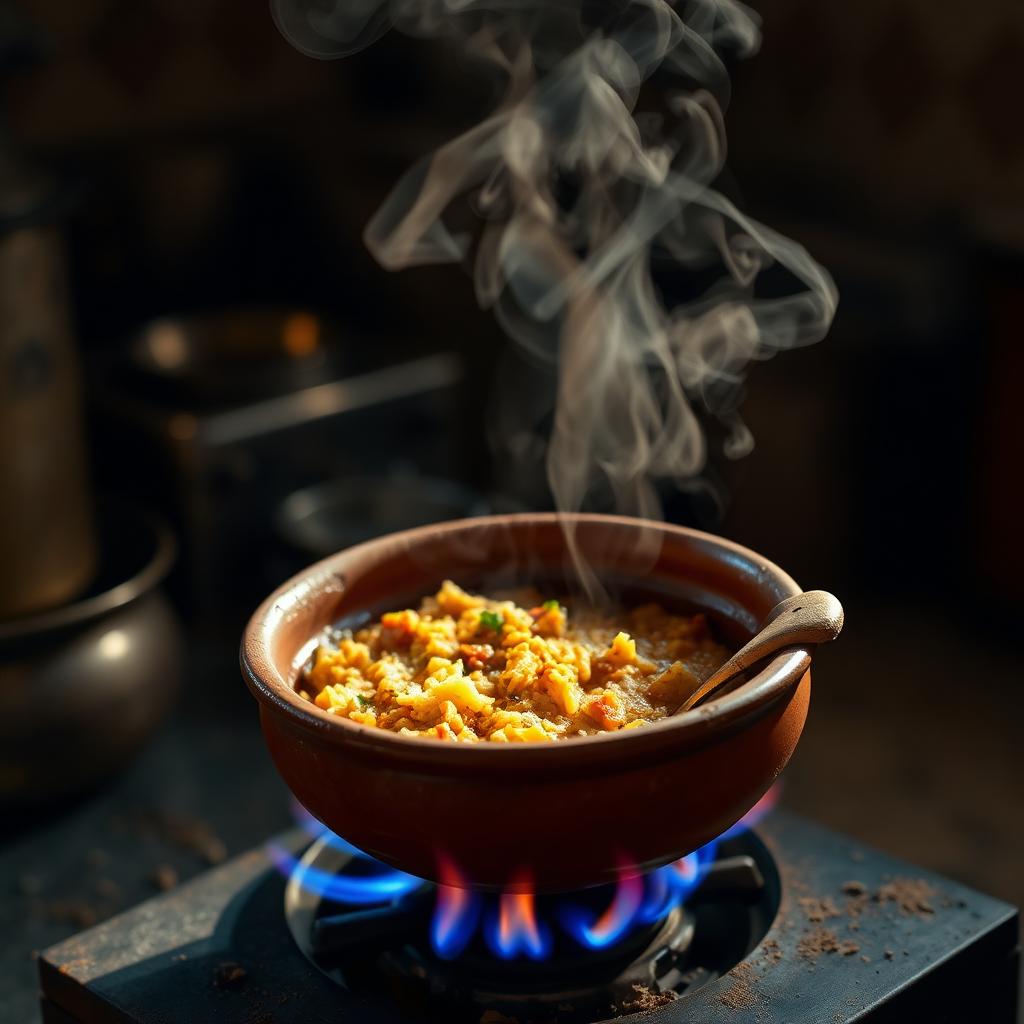
A terracotta handi cooking dal on a low blue flame, gentle steam rising

04 — Nutrients

Nutrients preserved in slow cooking

A handi cooks the way grandmothers cook — low, slow, and even. Clay holds heat gently and lets steam breathe through its walls, so vitamins, minerals and delicate flavours stay in the food, not lost to a hot metal pan.

  • Retains B-vitamins, iron and moisture in dals & rice
  • Needs 30–40% less oil than metal cookware
  • Alkaline clay balances the acidity of tomato & tamarind curries

— at a glance

Earthen clay vs. the rest

The old way
Clay Matka

Alkaline · mineral-rich · naturally cool · zero plastic

The modern way
Plastic Bottle

Leaches BPA & microplastics · acidic · warms in the sun

The modern way
Steel Fridge Bottle

Ice-cold · no minerals · shocks the throat · uses power

One good matka, one small ritual — and your water tastes like the river again.